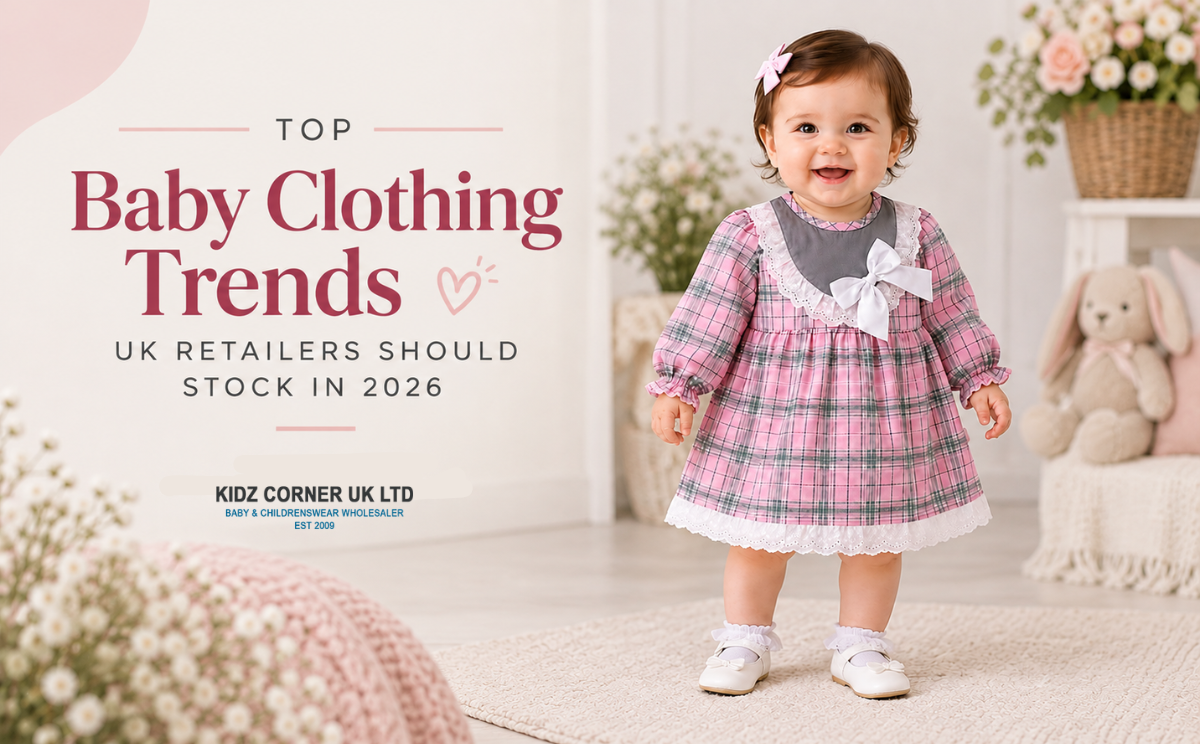
Top Baby Clothing Trends UK Retailers Should Stock in 2026
Parents’ expectations are changing, and they are changing fast. Today, it has become imperative for retailers to not only understand but also stay ahead of baby clothing trends in UK to maintain a profitable business. When you have a clear picture of what is “in fashion” and what your customers want, you can:
● Sell through stock faster
● Waste less on markdowns
● Build stronger reputation
So for boutique owners, online store owners, and growing multi-brand shops in the UK, knowing the upcoming trends in kidswear or babywear is crucial. More importantly, it's the difference between children's wear that sells and ones that sit and collect dust.
That is exactly why reading this blog is important for retailers. In this blog, we’ll guide you through the biggest baby clothing trends in the UK in 2026 that every retailer must be aware of. We’ll be covering colour, fabric, and prints in demand. Read on to explore the fastest-growing categories, seasonal buying advice, and learn the mistakes to avoid when restocking for the next year. Let’s get started!
Why Following Baby Clothing Trends Matters for Retailers
Most retailers don’t realise that following trends isn’t about chasing the latest fad. It’s about stocking smartly with an aim to sell out every product. Today, parents in the UK (as in the rest of the world) are influenced by three things particularly:
- Labels
- Social media
- Sustainability
So, retailers must ensure that their stock appeases parents who look for these qualities. Labels prove that your stock has high-quality items. And sustainable clothes are more comfortable and environment friendly. Whereas, if your stock aligns with viral reels and posts on social media, you can rest assured that parents who are looking for the "latest" and “most fashionable” babywear will choose your stock over your competitors.
On the other hand, a retailer who ignores shifting kids’ fashion trends in the UK risks filling their store with clothes that nobody cares for. As a result, products don’t sell fast, and they lose customers looking for the latest options.
There are three major benefits of aligning your product line with the trend. They are as follows:
- Higher selling rates: If your stock matches what parents are looking for, it will sell faster.
- Improved customer loyalty: When you stock the latest and trendiest clothes, parents will come back to you over and over rather than going to some other retailer.
- Smarter buying decisions: When you understand what’s selling, you can make a more informed decision when restocking.
For UK-based retailers who are sourcing their products from baby clothing suppliers in the UK, awareness of trends is vital. It must shape every business decision, from what to buy from wholesalers to how to store the most valuable products to optimise sales. This is more important for independent and small-scale retailers. Not only do they have to compete against each other but also against larger chains with bigger buying budgets.
By stocking trending baby clothes in the right quantities, independent retailers can gain leverage over their big-budget competitors and stand out even in a competitive market.
The Biggest Baby Clothing Trends UK Retailers Should Leverage
Several clear patterns are shaping demand in 2026. For this list, we won’t be focusing on fleeting micro trends, but trends that are here to stay. We’ve selected trends based on corroborated data across current UK kidswear trend coverage and the internet. Our list contains data based on how parents shop for babywear. So, let’s get started…
1. Sustainable and Organic Fabrics
In 2026, organic cotton, bamboo blends, and GOTS-certified fabrics are gaining mainstream attention and moving out of niche-specific markets. Market forecasts suggest that organic cotton and natural fabrics will be a priority for parents looking to buy clothes for their newborns and young children. The upcoming years will see a rise in popularity for these materials because they are sustainable and practical.
Organic cotton, bamboo blends, and GOTS-certified fabrics are safe and gentle on the sensitive skin of babies and kids, making them a popular choice among parents. These materials are ideal for both gifting and regular wear. So, retailers not only have a better chance of attracting new customers but also of building loyalty among existing customers if they stock babywear made of sustainable and organic fabric.
2. Gender-Neutral Clothing
Parents in 2026 are breaking the stereotype and opting for gender neutral colour palettes and designs. Instead of buying traditional colours like blue for boys and pink for girls, parents nowadays prefer gender-neutral colours such as sage green, mustard, terracotta, oatmeal, and dusty blue. Same goes for design. Emerging trends show that parents now prefer buying loose-fit and unisex clothes for their children instead of restrictive gender-specific options.
Gender-neutral babywear appeals to a wider buyer base. This includes parents who are unsure of their unborn baby’s gender and parents who are gifting clothes to others.
3. Personalised and Custom-Printed Babywear
Similar to emerging trends in sportswear and casualwear, kidswear is also seeing a rise in popularity of personalised and custom-printed apparel. Name embroidery, initials, and custom slogans on babygrows and blankets remain one of the fastest-growing categories this year.
Retailers offering boutique baby clothing with personalisation options consistently outperform their competitors. Stocking even a simple add-on embroidery for baby clothes can help you gain leverage over your competition.
4. Matching Family and Sibling Sets
When discussing matching family and sibling sets, it’s worth mentioning that coordinated children's wear is becoming a popular trend, not identical clothes. In 2026, coordinated sibling sets are becoming extremely popular among parents.
One reason this category is gaining so much popularity is that matching sibling sets are great for photography. This highlights the influence of social media on parents buying clothes for their children.
5. Loungewear-Style Everyday Basics
Conventional everyday pieces parents used to buy are rapidly being replaced with soft, relaxed-fit babygrows, ribbed loungewear sets, and oversized knitwear. A recurring theme in loungewear-style everyday basic kidswear includes the following:
- Elevated essentials such as light jersey and waffle knit with small design details like piping or stripes.
- Soft and oversized clothes such as oversized sweatshirts, loose joggers, and oversized tops for kids of almost all ages.
- Comfort-focused fabrics like brushed cotton and soft ribbing.
Trending Colours, Fabrics, and Prints for Babywear in 2026
Now that we’ve covered the major trends in the style of baby clothing in 2026, it's time to look at the finer details within each pattern. Stocking trendy colours, patterns, fabrics, and prints helps baby clothes retailers in the UK to diversify their product range, attract more customers, and keep their collection fresh.
Trendy Colours for Children’s Wear in 2026
According to current buying patterns and preferences, we see a rising demand for the following shades:
● Gender-neutral colours
● Sage
● Oat
● Terracotta
● Olive and bottle green
● Soft pastel colours such as blush pink, lavender, butter yellow, and peach
● Bright colours for children’s swimwear and playwear, like sky blue, hot pink and lime green
● Muted colours such as dusty rose, pale blue-grey, and subdued coral
This shift in colour preferences shows that parents are choosing colours more intentionally for their kids than before. Every colour in this list signifies a different purpose and intention. For instance, earthy and soft pastel shades suggest a calm preference for versatile everyday clothing. On the other hand, softer and more sophisticated colours like muted tones are ideal for occasional wear and gifting.
So, instead of relying on a single trend, UK retailers must diversify their product range. This will help them to offer a balanced colour palette. The most effective way to capitalise on this trend is to keep earthy and pastel shades along with brighter colours and emerging shades like lavender in selected collections.
Most Trending Fabrics for Babywear in 2026
In 2026, we have noticed a change in fabric preference for kids’ loungewear. Instead of going with a standard jersey, parents have started choosing ribbed cotton, waffle knit, and brushed cotton. Also, organic cotton blends have gained popularity in first-size and newborn categories specifically.
For baby clothes retailers in the UK, this trend suggests that parents are increasingly looking for comfort, softness, and better-quality fabrics. It also proves that sustainability has become a top priority among parents looking to buy clothes for their young ones.
Therefore, UK baby clothes retailers must stock more textured fabrics such as ribbed cotton, waffle knit, and brushed cotton for loungewear. Retailers must prioritise comfortable clothes that are safe for the baby’s sensitive skin, such as organic cotton options, and highlight fabric quality when marketing products.
Trendy Babywear Prints in 2026
When it comes to trending prints, we noticed that there is a high demand for some prints throughout the year, whereas some might only have seasonal demand. For example, though botanical and animal motifs remain reliable sellers year-round, ditsy florals and gingham checks are especially popular in the spring and during summer.
In 2026, however, we are also seeing that minimal prints are outselling other patterns and prints by leaps and bounds in the UK. This suggests that some parents are looking to buy garments with understated design.
This trend suggests two things:
- Parents are starting to favour versatile and timeless prints over busy designs.
- Seasonal clothing is still relevant.
As a retailer, you must, therefore, keep botanical and animal prints because they are reliable selling options round the year. To capture the seasonal market, stock seasonal patterns such as ditsy florals and gingham, particularly in summer and spring. You should also stock minimalist designs and avoid relying too heavily on busy all-over patterns. Overall, your focus should be on building a versatile collection.
Popular Baby Clothing Categories Expected to Grow in Demand in the Upcoming Years
Certain baby clothing collections are showing particularly strong growth heading into 2027. Market data shows that the following categories will be more popular than others:
1. Occasion Wear
The market data shows that there’s a steadily growing demand for occasion dresses year-round.
This category includes the following:
● Christening outfits
● Formal rompers
● Party dresses
● Heirloom-style vintage-inspired babywear
2. Everyday Essentials
In everyday essentials, some of the most popular baby clothing items include the following:
● Bodysuits
● Sleepsuits
● Multi-packs
Retailers in the UK can stock these types of clothes because they continue to be the highest-volume category. Kids’ bodysuits and sleepsuits are the backbone of the kids’ clothes retail market.
3. Swimwear
2026 data shows a decline in a single pre-holiday purchase. We see a broadening of purchase patterns. The purchase of swimwear is increasing year-round for lessons, indoor pools, and multiple trips rather than one seasonal outfit. This is also true for kids’ sportswear.
Pro tip: You must start selling swimwear collections from early spring onwards to boost your sales.
4. Gift Sets and Layette Sets
Growing demand for gift sets includes the following:
● Clothes for baby shower
● Clothes for gifting to newborns
● Curated and coordinated sets
These clothes are continuously outperforming single outfits because they are ideal for gift shopping.
Best Tips for Seasonal Collection: The Right Stock for Spring, Summer, Autumn and Winter
Buying trendy stock from wholesalers is more effective if you stock the right clothes for the right season. It boosts your sales and also attracts more customers. Here’s what you must stock to improve your seasonal sales.
Spring
For spring, stock these:
● Lightweight layering pieces
● Pastel prints
● Floral prints
● Transitional outerwear
Pro tip: Stocking for spring wear is best if you plan ahead, because research shows that parents buy spring clothes as soon as the weather changes.
Summer
The best kidswear to stock for summer is the following:
● Swimwear
● Sun-safe clothing (we recommend UPF-rated clothes)
● Breathable natural fabrics
NOTE: The demand for swimwear doesn’t peak in a particular season. Rather, it is in demand throughout the year.
Autumn
In autumn, retailers must stock the following types of kidswear:
● Knitwear
● Cosy loungewear
● Back-to-nursery essentials
● Clothes in earthy tones
● Layering pieces
Winter
The best children’s clothes for winter include the following:
● Snowsuits
● Pramsuits
● Occasion wear for Christmas
● Occasion wear for family gatherings
● Formal wear for kids
● Gift-ready pieces
Pro tip: Winter wear and Christmas wear sell quickly. This is why we advise that you prepare in advance and stock enough so you don’t run out of clothes to sell.
6 Best Tips to Choose Trendy Products
To make a smart choice, you need to follow trends, but what most people don’t tell you is that it doesn’t mean overstocking. So, what you need is a smart approach to buying wholesale baby clothes in the UK to optimise sales and cash flow. By following these tips, you can not only maintain a healthy cash flow but also attract more customers and satisfy their needs.
- Buy trendy pieces in smaller test quantities first. Trends are seasonal and often change frequently. So, it's best to buy new stock in limited quantities. If the stock doesn't sell as expected, then you can cap your loss to a minimum.
- Keep a core of reliable essentials. Essential clothes sell all year round. It also gives you a backup plan so that if the trendy kidswear doesn’t sell, you can always rely on the essentials to help you clear the stock.
- Look for a UK kids’ clothes wholesaler who offers low or no minimum order quantities. This allows you to try new stock in small quantities. Ultimately, it helps you try out new types of clothes and add more variety to your stock.
- Track what actually sells. Instead of simply filling your inventory with clothes that look appealing, monitor which stock moves quickly. It gives you a clear idea about what actually sells and what your customers actually want.
- Order little and frequently. When you order in small quantities, you have more chances of selling out your entire stock. And ordering frequently ensures that you never run out of materials to sell.
- Get the timing right. When you’re dealing with trending kidswear, the timing plays a very crucial role. Stocking the right clothes during the right season is more effective and proves to be more beneficial than stocking whatever goes viral on social media.
Common Buying Mistakes Retailers Should Avoid
Trend-buying for baby clothing in the UK is tricky business. Even the most experienced retailers make common mistakes that stop them from turning a sizeable profit. Avoid the following mistakes to ensure that your business keeps running smoothly:
- Overcommitting to a single trend. Don’t overcommit to a single trend before testing it first-hand. This is because you don’t want to be stuck with stock that doesn’t move.
- Filling your racks and rails with trendy clothes exclusively. Ignoring non-trending and essential wear is a very risky business. It directly affects the stability of your retail shop.
- Buying too far ahead of the season. You must stock kidswear at the right time because seasonal trends change fast. So, if you stock too far ahead, you might end up buying clothes that have recently gone out of trend.
- Underestimating gifting and occasional wear. The baby clothing trends show that there is a huge demand for occasional wear and clothes for gifting in winter. Missing out on the opportunity to capitalise on this demand translates poorly in terms of customer satisfaction and business revenue.
- Not reviewing sell-through data. If you monitor what’s actually selling and what’s just sitting and gathering dust, you’ll be able to better understand what your customers actually want. It’ll help you to make more informed decisions.
- Sourcing from suppliers who don’t have the capacity to restock quickly. If you end up buying kids’ clothes from a UK kids’ clothes wholesaler who can’t restock your shelves as soon as they are empty, then you’ll miss out on sales, customer demand, and opportunities to keep popular products in stock.
Buy Smarter, Sell Smarter by Connecting With a Dependable UK Baby Clothing Wholesaler
Kids’ fashion trends are constantly changing, and only those businesses that can adapt without investing in too much inventory and spending too much money will succeed.
If you are ready to renew your goods with the colours, materials, and styles that parents are looking for in 2026, then be sure to check our range of wholesale baby and children's clothing. No large minimum order requirements, quick delivery throughout the UK, and regularly updated products so your inventory remains fresh.
Whether you have a small store or an established shop, work with a baby clothing wholesaler that other UK businesses know and trust to purchase better, not more.
If you're ready to refresh your range with the fresh styles, fabrics, and colours parents are actually searching for, explore our full range of wholesale baby and children's clothing. And start stocking your racks with trends that your customers are interested in.
The Final Word
Staying ahead of baby clothing trends UK shoppers actually want isn't optional anymore. It's what separates retailers who sell through stock quickly from those left discounting rails nobody wanted. Blend trend-led pieces with reliable essentials, buy smart and often, and you'll build a collection that keeps customers coming back all year round.
FAQs
What are the latest baby clothing trends in the UK?
A: Sustainable and organic fabrics, gender-neutral colour palettes, personalised and custom-printed babywear, matching family sets, and loungewear-style everyday basics are among the strongest trends in 2026.
Which baby clothing styles are most popular in 2026?
A: Soft, relaxed-fit loungewear, ribbed and waffle-knit fabrics, minimalist prints, and personalised babygrows are performing particularly well. There is also consistently strong demand for occasion wear and gift sets.
How often should retailers update baby clothing collections?
A: Most successful retailers refresh their core seasonal ranges four times a year: spring, summer, autumn, and winter. They also regularly restock fast-selling essentials and trend-led pieces in smaller batches throughout each season, rather than waiting for one major seasonal update.
How do retailers choose the right baby clothing supplier?
A: Look for a supplier that offers genuine in-stock availability, low or no minimum order quantities, and fast UK dispatch. They should also provide clear information about fabrics and compliance while consistently stocking current, trend-relevant ranges rather than outdated styles.
What baby clothing products sell best throughout the year?
A: Everyday essentials such as bodysuits, sleepsuits, and basic multi-packs remain the highest-volume sellers throughout the year. Gift sets and occasion wear also perform consistently well, while footwear and swimwear are seeing demand across more of the year rather than relying on a single seasonal peak.
Recent Posts
Follow us on Instagram, Facebook & TikTok

We want to bring this Privacy Notice to you at the time we are collecting your personal data.We want you to be fully aware that when we process your personal data that we are processing it in compliance with the General Data Protection Regulations.
Copyright © 2026 Kidz Corner UK Ltd